If you coach trap, skeet, or sporting clays, you already know the hard part isn't watching a shooter miss — it's remembering where they miss, round after round, across every athlete you work with. ClayTrack replaces the notebook and the mental math with a free clay shooting coaching app: connect with each athlete, see their scores and where they're breaking down station by station, set goals, and track progress over a whole season. There's nothing to buy and nothing to install.
It's the same free ClayTrack your athletes already use to keep score — coaching is simply a lens on top of it. When an athlete links with you, their rounds flow straight to you; you never chase a scorecard photo again.
Connect with your athletes — with their consent
Coaching starts with a link between two accounts. You send a coaching request to an athlete by their @username or email, or an athlete asks you to coach them — and it only takes effect once the other person accepts. From then on you can see that athlete's shooting record, even if their scores are private to everyone else. Either of you can end the link at any time, and the athlete always sees exactly who is coaching them. No shared passwords, no logging into someone else's account — every athlete owns their data and chooses to share it with you.
One roster, every athlete's numbers at a glance
Your athletes list is the whole squad on one screen. For each shooter you see their rounds logged, average score, personal best, and when they last shot — so you can tell at a glance who's on a heater, who's gone quiet, and who's due for a check-in before you've even opened their profile.
See exactly where a round comes apart
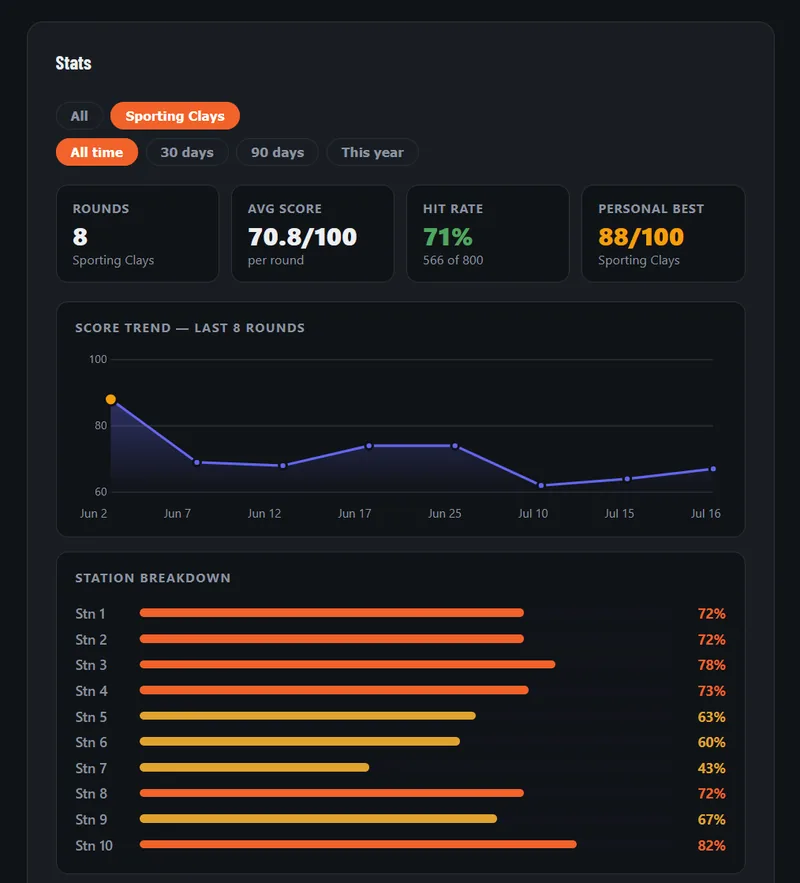
Open an athlete and their whole shooting picture is right in front of you: average and best per discipline, full round history, personal bests, and a score trend over time. The part coaches care about most is the station-by-station hit rate — a breakdown that shows the low house on skeet station 4, or a specific sporting clays stand, quietly costing them targets every week. You're diagnosing patterns instead of guessing from a single bad day.
Keep notes and set goals that track themselves
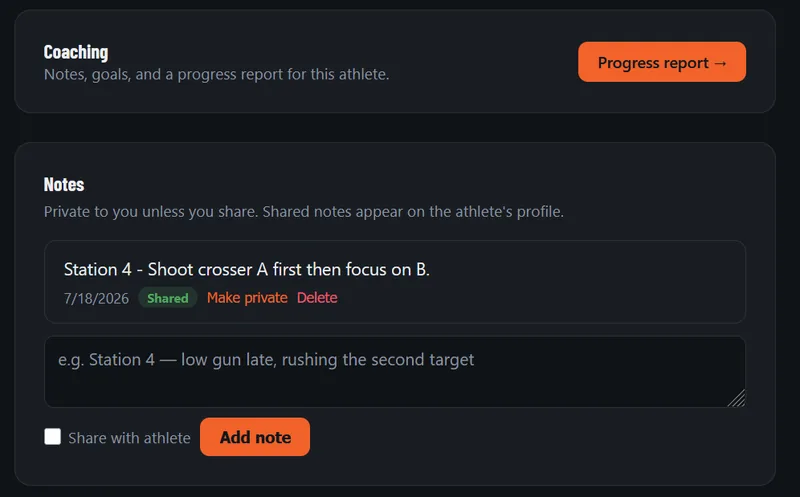
Keep private coaching notes on each athlete — or pin a note to a specific round so the context stays with the score — and share a note with the athlete when you want them to act on it before the next session. Set goals like lifting an American Trap average from 20 to 22 by the end of the season, and ClayTrack tracks the progress automatically from the athlete's rounds. No spreadsheet to maintain; the goal fills itself in as they shoot.
Coach a whole team from one dashboard
Group your linked athletes into a team — with an optional season — and see them side by side: averages, recent activity, and the stations the team is collectively missing most. That last one turns your practice planning into a decision instead of a hunch: if half the team is bleeding targets on the same presentation, that's what you drill this week.
Progress reports and CSV export
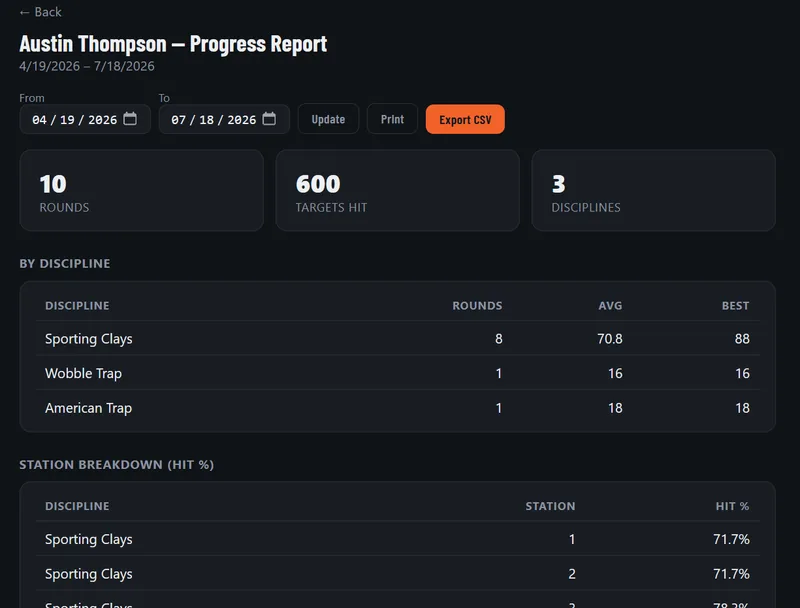
Every athlete has a progress report pulling together their trend and station breakdown, and you can export the underlying rounds as a CSV for your own records, a selection file, or a season wrap-up. Your coaching history lives in one place instead of a stack of paper cards.
Score on the line, review after
On a practice day you can run the card yourself: ClayTrack's scorekeeper mode lets you score on behalf of a shooter or a guest, target by target, from your own phone. The round lands in the athlete's history the same as any other — so scoring and coaching are the same workflow, not two systems to reconcile.
Coaching trap, skeet, and sporting clays
ClayTrack works the same way whichever discipline you coach. For trap coaching, every 25-bird card and post is there; for skeet coaching, the full 8-station card with doubles and the option shot; and for sporting clays coaching, a station-by-station course with each presentation logged as it's shot. Whatever your athletes shoot — American Trap, Wobble Trap, ATA Handicap, ATA Doubles, Bunker Trap, Skeet, Sporting Clays, or Five Stand — their scores flow to you the same way, and the station-by-station breakdown shows exactly which stand or house is quietly costing targets.
Free for you and every athlete
There's no per-athlete license, no coaching tier, and no setup. ClayTrack is free for every shooter and runs in any modern browser, so you can point your athletes to it today and start coaching within a minute of them accepting your link.

Start coaching on ClayTrack
Free for you and every athlete — connect with your shooters, see where they're missing, set goals, and run a team, with nothing to install. Create an account and send your first coaching link today.
Frequently asked questions
Is ClayTrack coaching free?
Yes. Coaching is part of ClayTrack, which is completely free — no per-athlete cost, no subscription, and nothing to install. You and your athletes just sign up with an email.
Can I use ClayTrack to coach skeet, trap, or sporting clays?
Yes — ClayTrack coaches all of them. Whether you run a skeet squad, a trap team, or sporting clays athletes, each discipline has its own scorecard and a station-by-station breakdown, and every athlete's rounds and progress flow to you the same way.
How does a coach get access to an athlete's scores?
By invitation and consent. You send a coaching request to an athlete by their username or email, or the athlete asks you to coach them. Once they accept, you can see their rounds and stats — even if their scores are private to everyone else. Either of you can end the link at any time, and the athlete always sees exactly who is coaching them.
What can a coach actually see about an athlete?
Their whole shooting picture: average and best per discipline, round history, personal bests, score trend over time, and a station-by-station hit rate so you can see exactly where a round comes apart. You're there to guide their shooting, not run their account — so an athlete can share all of it with you while keeping full ownership of their profile and scores.
Can I organize my athletes into a team?
Yes. Create a team (with an optional season), add your linked athletes, and see them side by side on one dashboard — averages, recent activity, and the stations the team is collectively missing most, so you know what to drill next.
Can I leave notes or set goals for an athlete?
Yes. Keep private notes on each athlete — or on a specific round — and share a note with the athlete when you want them to act on it. Set goals like raising an American Trap average from 20 to 22, and ClayTrack tracks the progress automatically from their rounds.
Can I export an athlete's progress?
Yes. Each athlete has a progress report with their trend and station breakdown, and you can export the underlying rounds as a CSV for your own records.
Is ClayTrack coaching built for youth or scholastic teams?
Today it is designed for adult athletes: each athlete creates their own account and personally consents to your coaching. It does not yet include the guardian-consent controls a youth or scholastic program needs, so it is best suited to coaching adults for now.