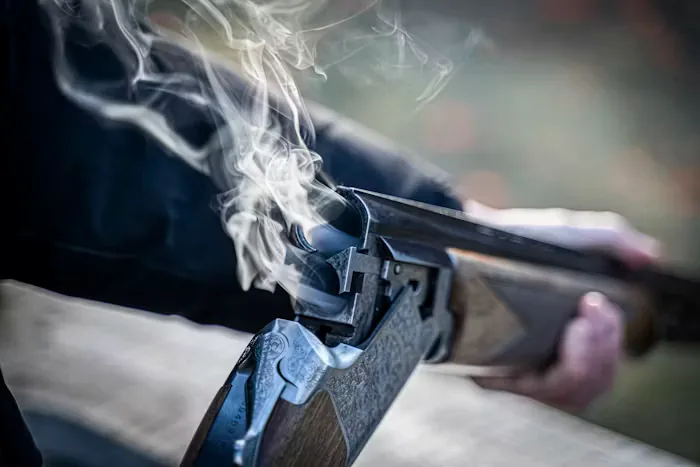
Walk onto any sporting clays course and you'll see two kinds of shotgun on the racks: sleek over-unders that break open at the hinge, and semi-automatics that cycle a shell with each pull of the trigger. New shooters almost always ask the same two questions — which type should I buy, and how much do I need to spend? This guide answers both. We'll cover the specs that actually matter on a sporting clays shotgun, lay out the honest case for semi-auto versus over-under, and recommend specific options at every price point from under $700 to $4,000-plus.
What makes a good sporting clays shotgun
Before brand names, understand what you're actually looking for. A sporting clays gun is built to swing smoothly on fast, varied targets and to be comfortable enough to shoot 100-plus rounds in an afternoon. The features that matter:
- 12-gauge — the standard for sporting clays. Widest ammo selection, cheapest target loads, densest pattern for long targets. (More on 20-gauge below.)
- 28–32 inch barrels — longer barrels give a smoother, more controlled swing on crossing targets. 30 inches is the all-round sweet spot for most shooters.
- Ventilated rib and a clean bead — sporting ribs help you track the target without obscuring it.
- Interchangeable choke tubes — essential. You'll change constriction for close versus distant targets. Most clays guns ship with a set.
- Weight in the 7.5–8.5 lb range — heavier than a field/hunting gun. The extra weight steadies your swing and soaks up recoil over a long day.
- Good balance — the gun should feel "between the hands," not muzzle-heavy or whippy. This matters more than any spec sheet.
Semi-auto vs over-under: the real comparison
This is the decision that trips up most first-time buyers. Both action types are completely viable for sporting clays — plenty of club champions shoot each. They simply trade off different things.
Over-Under
Two stacked barrels, two triggers' worth of fire from one trigger, and a break-open action. The traditional and most popular choice in competitive sporting clays.
The over-under's biggest practical advantage on a sporting clays course is two different chokes for a pair — an open choke in the first barrel for a close target and a tighter one in the second for a distant one. The break-open action also makes it dead simple to show the gun is empty between stations (a courtesy your squad will appreciate), there are no hulls flying out to chase down, and a quality over-under holds its value remarkably well if you later upgrade. The trade-off is cost: for the same build quality, an over-under runs more than a semi-auto, and the recoil of two fixed barrels is sharper than a gas gun's.
Semi-Automatic
A single barrel that cycles a fresh shell automatically. Gas-operated models use some of the shot's energy to soften recoil dramatically.
The semi-auto's headline benefit is recoil. A gas-operated semi-auto (as opposed to an inertia-driven one) bleeds off energy to cycle the action, so felt recoil is noticeably softer — a real help for recoil-sensitive, younger, or smaller shooters, and for anyone shooting high volume. Semi-autos are also usually the cheapest way into a reliable clays gun and are lighter to carry around a long course. The downsides: you only have one choke for both targets of a pair, the gun ejects hulls (some shooters and ranges find this antisocial, and you'll be picking up your brass), and there are more moving parts to clean.
| Factor | Over-Under | Semi-Automatic |
|---|---|---|
| Entry cost | Higher for equal quality | Lower — best value entry |
| Felt recoil | Sharper (fixed barrels) | Softest, if gas-operated |
| Chokes per pair | Two (one per barrel) | One |
| Hulls | Stay in the gun | Ejected — you collect them |
| Showing clear / safety | Very easy (break open) | Requires open bolt + chamber check |
| Resale value | Excellent | Good but depreciates more |
| Maintenance | Simple, few parts | More cleaning, more parts |
The best first sporting clays shotgun at each price point
Specific models that are widely available and well regarded for sporting clays, grouped by approximate street price. Models marked (O/U) are over-unders; (SA) are semi-autos.
Under $800 — getting started for the least money
At this level you're buying reliability over refinement, and that's fine. Best value here is almost always a semi-auto or a used gun.
- Stoeger M3000 / M3500 (SA) — inertia-driven, tough, and cheap. Recoil is firmer than a gas gun, but it runs forever.
- Tristar Viper G2 (SA) — a gas semi-auto at a budget price; softer shooting than the Stoeger.
- A clean used Remington 1100 or 11-87 (SA) — the classic gas gun; legendary soft recoil, and used examples are plentiful.
- Used over-unders — a used Browning or Beretta field O/U in good shape can be a smarter buy than a brand-new bargain O/U.
$800–$1,500 — the sweet spot for most beginners
This is where reliable, pleasant-to-shoot guns live, and where most first-time clays shooters should look.
- Beretta A300 Ultima (SA) — a gas semi-auto with Beretta reliability and soft recoil; arguably the best bang-for-buck clays semi-auto.
- Winchester SX4 / Browning Silver (SA) — proven gas guns that shoot soft and last.
- CZ Drake / Redhead (O/U) — the most affordable way into a new over-under; a genuine two-choke clays gun on a budget.
- Weatherby Orion / Element — solid value options that show up around this range.
$1,500–$3,000 — buy once, cry once
Spend here and you're buying a gun that will outlast your beginner phase and hold its value. For many shooters this is the only shotgun they'll ever need.
- Beretta 686 Silver Pigeon I (O/U) — the benchmark first "real" sporting over-under. Reliable, beautifully balanced, and holds resale value like few others.
- Browning Citori 725 Sporting (O/U) — a low-profile, superb-handling American clays staple; a direct rival to the Beretta.
- Beretta A400 Xcel Sporting (SA) — the premium gas semi-auto for clays; about as soft-shooting as it gets.
- Fabarm / Yildiz higher trims (O/U) — strong value over-unders worth a look at this level.
$3,000–$4,000+ — premium over-unders
You don't need to spend this much as a beginner, but if you know you're committed, these reward you with handling and durability that make hard targets feel easier.
- Beretta 694 / DT-series (O/U) — Beretta's dedicated competition line.
- Caesar Guerini Summit / Tempio / Woodlander (O/U) — superb fit and finish; a favorite step-up among serious clays shooters.
- Blaser F16 Sporting (O/U) — distinctive low profile and a loyal following.
- Browning Citori higher grades (O/U) — more wood, more engraving, the same proven action.
12-gauge or 20-gauge?
Start with 12-gauge. It's the sporting clays standard for good reason: cheap, abundant ammo and a denser pattern that's more forgiving on the long targets that separate scores. Light 1-ounce and 7/8-ounce target loads keep recoil mild, so the "12-gauge kicks too much" worry is overblown when you're shooting target loads in a heavy clays gun.
A 20-gauge makes sense if the gun is for a smaller-framed, younger, or notably recoil-sensitive shooter — it's lighter to carry and kicks less. The trade-off is a thinner pattern that's less forgiving at distance. It's a fine choice for the right person, just not the default first pick for an adult beginner.
New vs used
A quality used over-under is one of the smartest buys in shooting sports, because good ones barely wear out and hold value. A used Beretta 686 or Browning Citori in honest condition will often outperform a brand-new gun at the same price. Inspect for off-face barrels (any wobble when closed), excessive rib or screw wear, and a smooth-locking action — or bring along an experienced shooter. For semi-autos, a used gun is fine too; just check the gas system and recoil spring are clean and the bolt cycles crisply.
The one thing that matters most: fit
Here's the truth that no spec sheet captures: the best sporting clays shotgun is the one that fits you. A gun that fits — correct length of pull, comb height that puts your eye right down the rib, the right balance for your build — will out-shoot a more expensive gun that doesn't. Fit is why you should mount several guns at a shop, shoot rentals where you can, and prioritize how a gun feels in your hands over a name on the receiver. A good fitter or a coach at your local club is worth more to your scores than the next price tier up.
New to the sport itself? Pair this with our guides on what sporting clays is and how it compares to skeet and trap — and once you're on the course, how scoring works.

New gun? Track every round and watch your scores climb
ClayTrack scores Sporting Clays, Trap, and more — in your browser, no download needed. Shoot with your squad, score together in real time, and see your accuracy improve as you learn your new shotgun.
Frequently asked questions
What is the best shotgun for sporting clays beginners?
For most beginners: a 12-gauge with 28- to 30-inch barrels, a ventilated rib, and interchangeable chokes — that fits you well. A gas-operated semi-auto like the Beretta A300 or Winchester SX4 gives the softest recoil for the money; an entry over-under like the CZ Drake (or a Beretta 686 Silver Pigeon with more budget) gives you two chokes and an instant second shot. Gun fit matters more than the brand on the receiver.
Should I get a semi-auto or over-under for sporting clays?
Both are excellent. Semi-autos are cheaper to get into, lighter to carry, and soak up recoil if they're gas-operated — but offer one choke at a time and eject hulls. Over-unders let you pick two chokes for a pair, are simple to show clear, and hold resale value, but cost more for equal quality. Budget or recoil-sensitive beginners often start with a gas semi-auto; many competitors shoot over-unders.
What gauge shotgun is best for sporting clays?
12-gauge is the standard — widest ammo selection, cheapest target loads, and the most forgiving pattern at distance. A 20-gauge is lighter and kicks less, which suits smaller or younger shooters, but it's less forgiving on long targets. Most adult beginners are best served by a 12-gauge with light 1-ounce or 7/8-ounce loads.
How much should I spend on my first sporting clays shotgun?
A reliable entry gun starts around $600–$1,000 for a gas semi-auto or a budget over-under. Stretching to $2,000–$3,000 buys a quality over-under like a Beretta 686 Silver Pigeon or Browning Citori 725 that will last decades and hold its value. You don't need to spend more than that as a beginner. Prices are approximate and vary by market.
What barrel length is best for a sporting clays shotgun?
Thirty inches is the most popular all-round choice — long enough for a smooth swing on crossers, short enough to stay maneuverable. Twenty-eight inches suits smaller shooters or those who want a livelier feel; 32 inches suits taller shooters who like a very stable swing. Fit and balance matter more than the exact number.